Renter-Friendly Upgrades: No-Drill Ideas for UK Tenants
Renter friendly upgrades a UK tenant can make with no drilling, painting or plumbing, each with a deposit-risk verdict and what to ask your landlord.

Renter friendly upgrades are changes a tenant can make to a rented home that come out again without a trace: no drilling, no painting and no plumbing. They matter because the deposit is judged on how the flat looks on the day you leave, against the photos taken on the day you arrived. This is a research-led guide built from tenant and landlord guidance, not from testing kit in a flat of our own, and every upgrade below carries a deposit-risk verdict and the question to put to your landlord before you start.
The rules come first because they decide everything else. Shelter (the housing and homelessness charity whose advice pages cover tenants in England) says tenants should not make improvements without the landlord's agreement, and that the agreement should be in writing before any work starts. The upgrades in this guide are the ones designed to need no agreement at all, plus a few where a two-line email saves an argument later.
What counts as a renter friendly upgrade?
A renter friendly upgrade passes three tests. It leaves no hole, mark or residue when it comes down. It needs no tools beyond a screwdriver for flat-pack. And it leaves the landlord's own fittings untouched, or stored safely and put back.
Fail any of those and the change stops being yours. Anything fixed to the walls, floor or ceiling becomes a fixture, and fixtures sit in a different legal box from your belongings, as explained below. That one idea is why a tension rod is a renter upgrade and a screwed-in curtain pole is an alteration.
Do you need landlord permission for small changes?
For anything that sits, plugs in or clips on, no. For anything that fixes into the building, yes, and in writing. The NRLA (the National Residential Landlords Association, the main trade body for private landlords) points out that a verbal agreement is not treated as consent by a deposit-scheme adjudicator, so a chat at the door counts for nothing at check-out.
Most tenancy agreements carry a clause barring alterations without consent, and a landlord can ask for unauthorised changes to be reversed at the tenant's cost. Read yours before you buy anything. The clause usually sits under a heading such as "alterations", "decoration" or "tenant's obligations".
The Renters' Rights Act 2025 (the law reforming private renting in England) changed a lot from 1 May 2026: Section 21 ended and most assured shorthold tenancies became assured periodic tenancies, according to North Devon Council. It did not create a general tenant right to make alterations. The consent rule it added is about pets, so the permission question for upgrades works exactly as it did before.
How do deposit deductions work for upgrades?
Three rules from landlord and tenant guidance shape every verdict below. First, a landlord can claim only for damage beyond fair wear and tear, and only the actual loss, not the cost of brand-new replacements. Second, anything you fix permanently becomes the landlord's when you go, and a landlord cannot keep an improvement and also charge you for it. Third, the check-in inventory is the evidence, which is why the NRLA lists paint lifted by tape or Blu Tack among common redecoration disputes.
Shelter Cymru, the Welsh housing charity, draws the line plainly: holes in plaster and damaged paintwork from hanging pictures are deductible damage, while minor scuffs are wear and tear. That single distinction explains why so many renter upgrades revolve around not making holes.
Which upgrades carry the least deposit risk?
The table ranks the main upgrade types by how likely they are to cost you money at check-out. Low means it touches nothing fixed. Medium means it touches a surface and depends on how you remove it. High means it changes something the landlord owns, so get written consent first.
| Upgrade | Deposit risk | Landlord permission |
|---|---|---|
| Freestanding and leaning shelving | low | Not needed (ask for an anti-tip fixing) |
| Tension, clip-on and no-drill blinds | low | Only if removing existing blinds |
| Lamps, smart bulbs and smart plugs | low | Not needed |
| Rugs, throws and soft furnishings | low | Not needed |
| Battery security and smart-home kit | low | Only for locks, alarms or thermostats |
| Adhesive hooks and picture strips | medium | Ask if walls are freshly painted |
| Swapping cupboard handles or a shower head | medium | Ask, and keep the originals |
| Peel-and-stick wallpaper, tiles or flooring | high | Written consent first |
Shelving and storage without drilling
Storage is where most renters reach for a drill, and where a drill is least needed. Leaning ladder shelves, freestanding bookcases, over-door hooks and tension poles that wedge between floor and ceiling all add storage without a single fixing. Under-bed boxes and stacking units do the rest.
The one exception is safety. A tall bookcase or wardrobe can topple, and an anti-tip strap is the fixing worth asking about. Our guide to flat-pack furniture in a rented flat covers making that request and making good when you leave.
Deposit risk: low. Ask the landlord: "Can I fit one anti-tip strap to this wall, and fill the hole when I leave?" for anything taller than about a metre and a half.
Blinds and curtains without drilling
Bare windows and broken blinds are among the commonest complaints about rented flats, and the fixes come in three no-drill shapes. Tension blinds wedge inside the window recess. Clip-on blinds hook over the opening sash of a uPVC window. Adhesive blinds and temporary blackout panels stick to the frame or glass. A tension curtain rod inside a recess holds lightweight curtains the same way.
Treat glass and uPVC as the friendly surfaces. Adhesive on a painted window reveal is where marks come from.
Deposit risk: low. Ask the landlord: "Can I take the existing blinds down and store them, and put them back before I leave?" Store them in the original packaging or a labelled bag.
Lighting that plugs in or screws in
Lighting changes the feel of a rented flat faster than anything else on this list. Floor and table lamps on a plug, smart bulbs in the existing ceiling fittings and plug-in wall lights with the flex run along the skirting all leave the wiring alone. Keep the original bulbs in a drawer and put them back on the way out.
Replacing a ceiling rose or a light fitting is electrical work, which needs a qualified electrician and the landlord's agreement. Adhesive LED strip lights sit in between: the strip is cheap, but the adhesive is the same paint-lifting problem as any sticky hook, so run it on kitchen units or furniture rather than painted walls.
Deposit risk: low for lamps and bulbs; medium for adhesive strips. Ask the landlord: nothing for lamps and bulbs; for anything wired in, "Can your electrician fit this, and will you want it left or removed?"
Can you make a rental smart without drilling?
Yes. Smart plugs, smart bulbs, battery sensors, a smart speaker and a plug-in hub cover most of what a renter wants, and all of it leaves with you. Our no-drill smart home setup guide walks through the whole kit list, and the smart plugs for renters guide covers the cheapest starting point.
The thermostat is the one device that touches the landlord's system. Guidance for landlords in England and Wales recommends that tenants can control the heating, but swapping the thermostat is still a change to the boiler controls, so ask first.
Deposit risk: low. Ask the landlord: "Can I swap the thermostat for a smart one, and put the original back when I leave?" Never touch the boiler itself.
Can you add security without drilling?
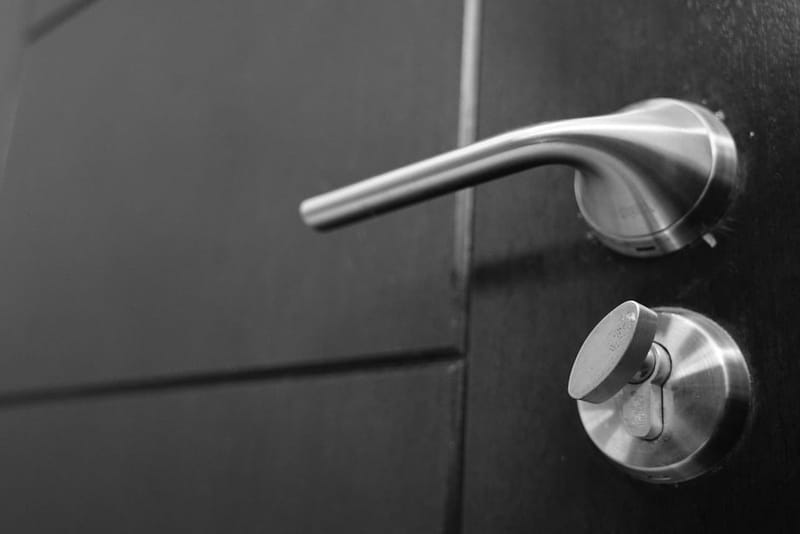
Yes, and it is one of the areas where no-drill kit has caught up most. Battery video doorbells on no-drill mounts, cameras with magnetic bases, portable door locks and adhesive contact sensors all improve security without altering the door. Our guide on how to secure a rented flat without drilling covers the full set, including where you can legally point a camera in a shared building, and the no-drill video doorbell comparison covers that one device in depth.
Deposit risk: low for battery and plug-in kit. Ask the landlord: "Can I change the lock cylinder, and give you a key?" Lock changes and wired alarms always need written consent.
Hanging pictures and mirrors
Pictures are the classic deposit trap, because a nail is the obvious answer and a nail hole is exactly what deposit schemes treat as damage. A picture ledge on a freestanding shelf, a large frame leaning on a sideboard, or a mirror on a floor stand all avoid the wall entirely.
Stretch-release adhesive strips are the next step, and the surface decides how they come off. Cured emulsion on sound plaster usually releases cleanly when the tab is pulled slowly straight down; fresh paint, wallpaper and chalky matt emulsion lift with the strip. Heavy mirrors are not a job for adhesive.
Deposit risk: medium for adhesive strips. Ask the landlord: "Can I put up a few picture hooks, and fill and touch in the holes when I leave?" Many landlords agree, and the email is your proof.
Rugs, textiles and soft furnishings
Rugs cover tired carpet or cold laminate, protect the floor under a desk chair and soak up noise in a flat with neighbours below. Add throws, cushions and curtains from the tension rod above and a room changes character with nothing fixed at all. A non-slip underlay keeps a rug in place on hard floors without adhesive.
Deposit risk: low. Ask the landlord: nothing. Keep a rug off a carpet that was damp, and dry it out first.
Kitchen and bathroom swaps
Cupboard handles and knobs unscrew from their existing holes, so new ones can go on as long as they match the hole spacing. Bag and label the originals. A hand-held shower head that unscrews from its hose by hand is the same kind of swap. Anything that means touching a tap, mixer or pipe is plumbing, which sits outside this guide and needs the landlord.
Adhesive splashback tiles and vinyl on worktops look like an easy win and are the opposite. Kitchen heat and steam bond adhesive harder than it was meant to hold, and the finish underneath pays for it.
Deposit risk: medium. Ask the landlord: "Can I swap the cupboard handles if I keep the originals and refit them?" Keep that email with your inventory.
Is peel-and-stick wallpaper renter friendly?
Not reliably. Peel-and-stick wallpaper, tiles and floor planks are sold as renter-friendly, but removal depends on the paint or floor finish underneath, and a patch of lifted emulsion across a whole wall is a redecoration claim waiting to happen. Painting is outside this guide for the same reason: it changes the landlord's finish.
If you want a feature wall, ask. A landlord who agrees in writing has accepted the change, and the NRLA guidance on fixtures shows why getting that agreement in writing protects you both.
Deposit risk: high. Ask the landlord: "Can I put removable wallpaper on this wall, and what condition do you want it left in?"
Air, damp and energy
Damp is a repair issue, not a decor one, and the landlord carries the repair duty. A plug-in dehumidifier and better ventilation habits help with condensation in the meantime; our guide on damp and condensation in a rented flat sets out what is yours to fix and what to report.
For energy, removable draught excluders and thermal curtains on a tension rod cost little and leave no trace. Plug-in solar has its own rules for renters, set out in our guide to whether plug-in solar is worth it for renters.
Deposit risk: low. Ask the landlord: report damp in writing; nothing needed for draught excluders.
What should you check before buying plug-in kit?
Every plug-in upgrade in this guide should carry a UKCA or CE mark and come with a UK three-pin plug. Those marks are the conformity markings the UK government accepts for most electrical goods placed on the market in Great Britain. A product with a foreign plug and a travel adaptor is a fire risk you do not want in someone else's flat, and an electrical fault in a rented home is a bad conversation with a landlord.
Buy from a seller that lists the product for the UK market, and check the listing and box for the marking before it goes in a socket. This guide names no specific products to buy; the linked guides cover individual devices.
How do you protect your deposit when you upgrade?
- Photograph before you change anything. Every wall you stick to, every blind you take down, dated and kept with your check-in inventory.
- Get permission by email. Two lines, sent before you start, and kept until the deposit is back.
- Keep every original. Bulbs, handles, blinds and shower heads, bagged and labelled.
- Undo it early. Take everything down a week before check-out so there is time to touch in a mark.
- Compare against the inventory. Walk the flat with your move-in photos before the landlord does.
Frequently asked questions
What are the best renter friendly upgrades?
Can I put up shelves in a rented flat?
Do I need landlord permission to change blinds?
Are command strips safe for a deposit?
Did the Renters' Rights Act give tenants a right to make changes?
Who owns an upgrade I fix to the walls?

Smart Home for Renters: The No-Drill Setup Guide
How to Secure a Rented Flat Without Drilling

How to Stop Damp and Condensation in a Rented Flat