Are Plug-In Solar Panels Worth It for Renters?
Are plug-in solar panels worth it for UK renters? Government figures put savings at £70-£110 a year. Payback, orientation and how to use more of it.
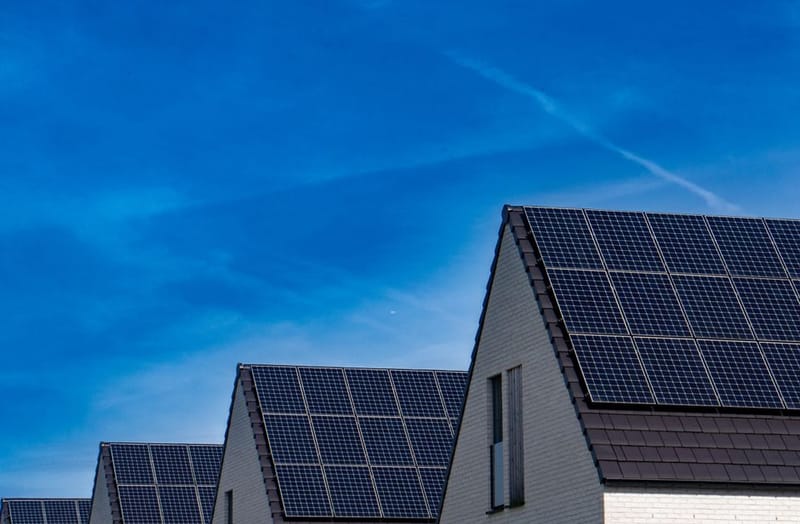
Plug-in solar is pitched hard at renters, and since 27 August 2026 it has been legal to plug a compliant kit into a normal socket in Great Britain. Whether it pays comes down to one thing more than any other: how much of the power you generate you use at the moment it is generated. Get that right and the numbers work over the life of the kit. Get it wrong and the panel spends the day feeding the grid for nothing. Here is the honest arithmetic, using the government's own figures rather than sellers' brochures.
How much does plug-in solar actually save?
The most reliable figures come from the final-stage impact assessment published by the Department for Energy Security and Net Zero (DESNZ, the government department that wrote the plug-in solar rules) in July 2026. It models an 800W kit in two common positions:
- Tilted at 30 degrees, facing south: about 690 kWh a year generated, of which around 62% (428 kWh) is used in the home.
- Hung vertically on an east- or west-facing balcony: about 378 kWh a year generated, of which around 72% (272 kWh) is used in the home.
Only the power you use counts as a saving. At the Ofgem price cap for 1 October to 31 December 2026 (Ofgem is the GB energy regulator, and its cap sets the average Direct Debit unit rate at 26.32p per kWh), those two cases are worth roughly £113 a year and £72 a year respectively. That is about £6 to £9 a month. Citizens Advice uses the same headline, describing the saving as up to £110 a year.
You will see sellers quote £175 to £210 a year. Those figures generally assume you use almost everything the panel makes, which few households manage without storage. Plan around the government numbers and treat anything above them as a bonus.
| Set-up | Generated per year | Used at home | Saving at 26.32p/kWh |
|---|---|---|---|
| South-facing, 30° tilt | ~690 kWh | ~428 kWh (62%) | ~£113 |
| East/west balcony, vertical | ~378 kWh | ~272 kWh (72%) | ~£72 |
Generation and self-consumption from the DESNZ final-stage impact assessment (Table 7); saving recalculated at the October-December 2026 price cap unit rate.
Why is self-consumption everything?
A plug-in kit feeds your flat's ring circuit, and whatever is switched on at that moment uses the power first. Anything left over flows out to the grid. Plug-in devices earn no export payment, so that surplus is worth nothing to you. Your daily routine therefore matters more than the panel itself:
- Home during the day (working from home, retired, on parental leave): the fridge, router, laptop, kettle and washing machine soak up most of the output, and you land at the top of the range.
- Out from nine to five: only the background load (fridge, freezer, router, devices on standby) is running while the sun is strongest, so more of the output is wasted and the saving falls towards the bottom of the range or below it.
Before you buy, be honest about when you are home and drawing power. That single answer predicts your saving better than any wattage figure on the box.
How can you use more of the power you generate?
You cannot store the power, but you can move your usage to meet it. Small changes add up because every kilowatt-hour you shift into daylight is worth the full unit rate rather than nothing:
- Run the washing machine and dishwasher around midday. Most have a delay-start button, so you can load them in the morning and set them to start late morning even if you are out.
- Put chargers on a timer. E-bike, scooter, power tool and laptop batteries can charge in daylight. A smart plug with a schedule does this without any wiring.
- Batch cooking and laundry on sunny weekends. Weekends are when many working renters are home, and summer weekends do much of the year's generating.
- Watch the background load. Fridges, freezers and routers run all day and quietly use a steady share of the output, which is why even an empty flat saves something.
What does a kit cost and how long does it take to pay back?
Compliant kits went on sale from late August 2026. At the time of writing, launch prices range from around £350 for a single smaller panel to roughly £700-£950 for a two-panel kit near the 800W cap, with mounting brackets sometimes extra. Prices are moving quickly as more models are approved, so check current listings before you budget.
Working through a two-panel kit at £700:
- South-facing at 30 degrees, saving about £113 a year: payback in a little over six years.
- Vertical on an east or west balcony, saving about £72 a year: payback in nearly ten years.
Those numbers move with the price cap. If unit rates rise, every kilowatt-hour you use is worth more and payback shortens; if they fall, it lengthens. A smaller single-panel kit costs less but also generates less, so payback lands in a similar range. Use our plug-in solar checker to run the figures for your own flat.
The longer view is what makes it worthwhile. Solar panels commonly carry 20 to 25-year performance warranties and micro-inverters (the small box that converts the panel's DC power to mains AC) commonly 10 years or more. A kit that pays back in six to ten years can keep saving for many years after that, which is the real return.
Does the direction your flat faces change the answer?
Yes, more than most buyers expect. The impact assessment's vertical east/west case generates barely more than half what the tilted south-facing case does. A south-facing balcony, patio or flat roof where you can angle the panel is the best case; a north-facing window is not a realistic site at all.
Shade matters as much as direction. A neighbouring block, a tree or the balcony above can cut output for hours a day, and a partly shaded panel loses more than its shaded share. Spend a sunny day noting when direct sun reaches your spot before you spend any money. If it only gets a couple of hours, the maths will not work however cheap the kit.
The renter advantage: you take it with you
This is the point that changes the whole calculation for renters. A plug-in kit is portable: it unclips, unplugs and moves house with you. A six-to-ten-year payback is still achievable if you move after two years, because you reinstall the same kit at your next home and carry on saving. Rooftop solar stays with the building; plug-in solar is an asset you keep.
Moving does involve a little admin. The interim product specification makes telling your Distribution Network Operator (DNO, the company that runs the local power network, shown on your electricity bill) mandatory on both connection and disconnection, under G98 (the grid-connection standard for small generators). It is a short notification form, not an application. When you move, notify the disconnection at the old address and the connection at the new one. Your new home also needs a suitable spot, so check orientation and shade before you sign a new tenancy if solar matters to you.
Can you add a battery to make it pay faster?
Not under the current rules. The 2026 regulations cover battery-less plug-in solar only: a compliant device must not store electricity imported from the mains, and a plug-in battery wired into your household circuit is not permitted. That matters for renters who are out all day, because storage is what would let the afternoon surplus run the evening. Our guide to plug-in solar batteries in the UK tracks where the policy stands.
The legal workaround is a portable power station: you charge it, then plug appliances into it, so it never feeds your fixed wiring. It adds a significant upfront cost and does not change the payback much on its own, so treat it as a convenience rather than a way to rescue the savings.
What costs and catches can cut the saving?
- No payment for exports. Surplus power earns nothing, so do not count it in your sums.
- One kit per household. You cannot add a second kit to double the saving; the specification allows one device per household on a single final circuit, plugged straight into a wall socket and never into an extension lead.
- Older wiring. The specification expects residual current protection (RCD) on the circuit. If your consumer unit is old, ask the landlord to have it checked before you plug in; that is their installation, not yours.
- Non-compliant kits. A cheap import that is not listed on the ENA (Energy Networks Association) plug-in solar register is not legal to connect, whatever its price. Check the exact model number before you pay.
- Permission. If you cannot get landlord consent, or the building's lease bans balcony fixtures, the panel has nowhere to go.
When is it not worth it for you?
Be realistic about the cases where the maths does not stack up: a flat that is empty through the working day and stays that way; no south-ish, unshaded spot for the panel; a heavily shaded balcony; or a tenancy where the landlord or freeholder will not agree. In those cases the panel either generates too little or you use too little of what it makes, and a payback stretching past ten years leaves little margin. The money usually goes further on draught-proofing, LED bulbs or a smarter tariff first.
If you work from home even two or three days a week, have a south-facing balcony and expect to rent for several more years, wherever that is, plug-in solar is one of the few energy upgrades a renter can make and keep.
How do you decide in five minutes?
- Check the spot. Does it face roughly south and get several hours of direct sun? If not, expect the low end of the range.
- Check your days. Are you, or your appliances on timers, using power between about 10am and 4pm?
- Check permission. Will your landlord agree in writing, and does the building allow it?
- Check the kit. Is the exact model on the ENA register, with an approved UK plug?
- Run the sum. Kit price divided by £70-£110 gives your payback in years. Under ten, with a good spot, it is worth it.
Ready to go ahead? Our guide to setting up plug-in solar in a rented flat without drilling covers the install, and the plug-in solar guide for UK renters covers the rules in full.
Frequently asked questions
How much can a renter save with plug-in solar?
Is plug-in solar worth it if I might move soon?
Do I need a battery to make it worth it?
What is the payback period for plug-in solar?
Do I get paid for the electricity I export?
Sources
- DESNZ: Plug-in solar final-stage impact assessment (July 2026), Table 7, generation and self-consumption figures
- Ofgem: Energy price cap unit rates and standing charges, 1 October to 31 December 2026
- SI 2026/848 (legislation.gov.uk)
- DESNZ: Plug-in Solar Device Interim Product Specification (version 2)
- Citizens Advice: Six things to know before plug-in solar panels hit UK shelves
Last reviewed: 30 October 2026.
Ready to try plug-in solar in your rental?
See where renters stand on permission and how to set a panel up with no drilling.