Portable Dishwasher With No Plumbing: A Renter's Guide
A portable dishwasher with no plumbing fills by jug and drains to the sink. Jug vs tap adapter, capacity, size, noise, running cost and your landlord.
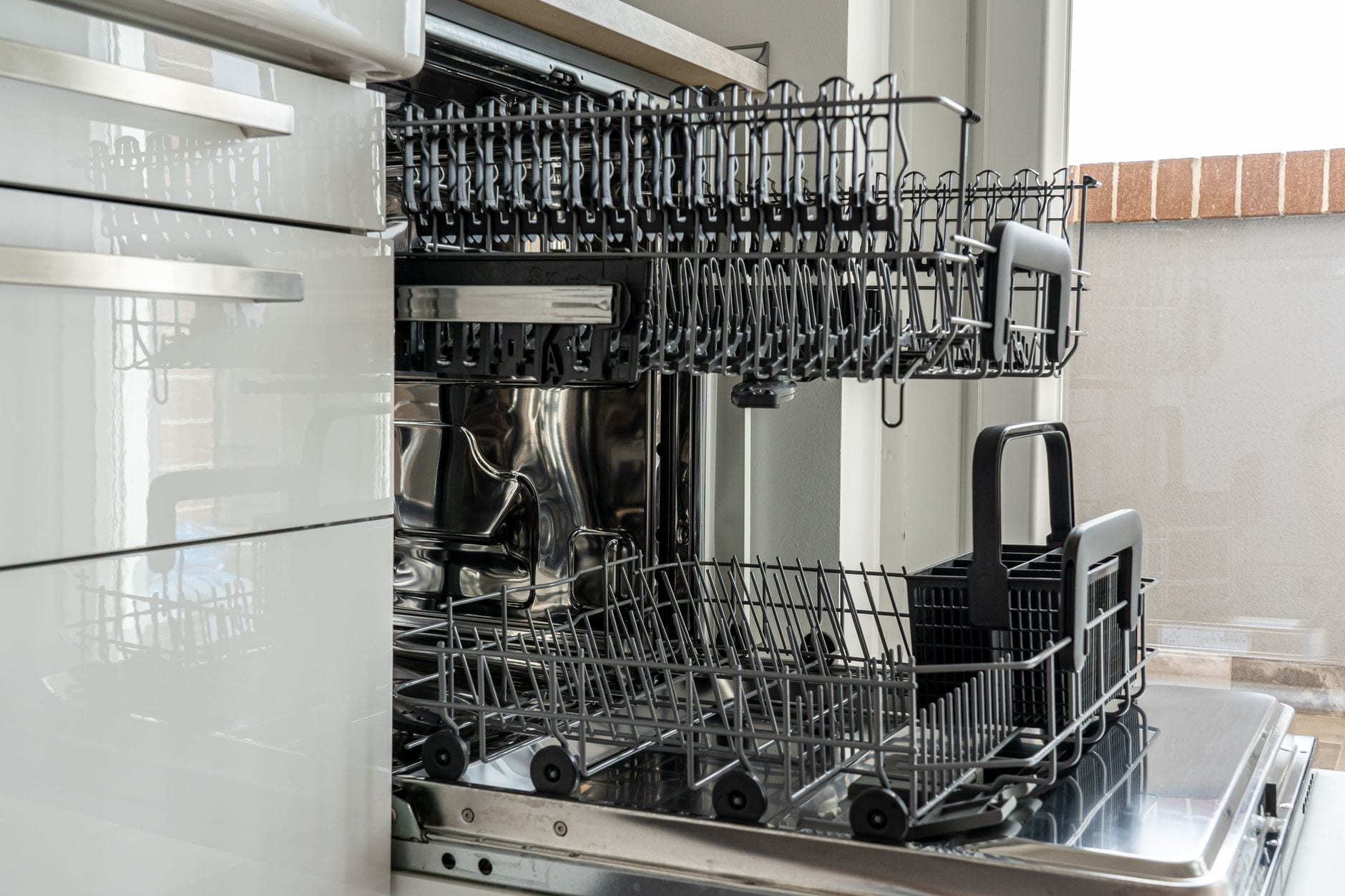
A portable dishwasher with no plumbing solves a very rented-flat problem: a kitchen with no dishwasher space, no spare valve under the sink, and a tenancy that rules out cutting into the cabinets. A tabletop machine with its own water tank sidesteps all three. It sits on the worktop, plugs into the wall, takes its water from a jug and empties into the sink.
This guide covers how the two kinds of portable dishwasher work, how many place settings one or two people need, how much worktop they take, how loud they are, what they cost to run on the current price cap, and what a tap adapter means for your tenancy. It is research-led: every figure comes from manufacturers' product information sheets, declarations of conformity, UK retailer listings and the energy regulator. We have not owned or run any of these machines ourselves.
What is a portable dishwasher with no plumbing?
Retailers use tabletop, countertop and mini dishwasher for the same category: a small, freestanding box about the size of a microwave that holds two or three place settings. What makes one plumbing-free is a built-in water tank. You lift a lid on top, pour in the water for one cycle, and the machine heats and pumps it itself. The dirty water leaves through a drain hose that hooks over the edge of the sink.
Nothing connects to the supply pipes and nothing is drilled, so the machine leaves the kitchen exactly as it found it. When you move, it goes in the car with the kettle.
Many tank models can also take water from the tap through an inlet hose and an adapter. That is a convenience, not a requirement, and it is the one part of the setup that touches the landlord's fittings. The section on tap adapters below deals with it.
Fill-by-jug or tap adapter: which suits a rented flat?
The two ways of getting water into a tabletop machine trade effort against intervention.
Fill-by-jug
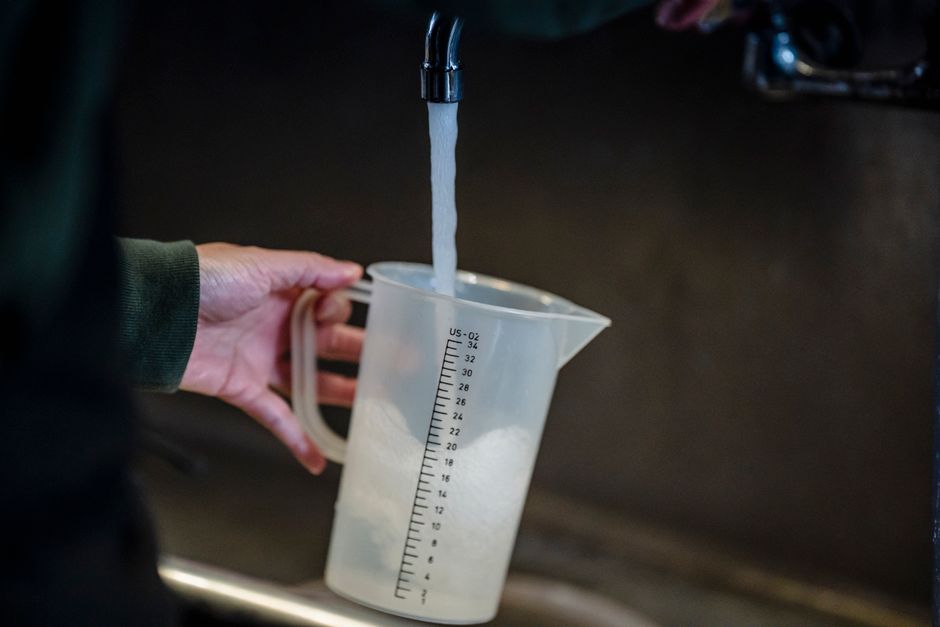
The tank takes one cycle's water, so you refill it every time you run it. On the models below that means 6 to 6.5 litres, roughly four full trips with a 1.5-litre jug. It takes a minute or two and touches nothing that belongs to the landlord. It also means the machine can never draw water while you are out, which removes the worst failure a dishwasher can have in a flat above someone else's ceiling.
Tap adapter
An inlet hose runs from the back of the machine to the kitchen tap, where an adapter screws onto the spout in place of the aerator, the small mesh nozzle at the tip. You open the tap, the machine fills itself, and you close the tap again. Some machines ship with the inlet hose but not the adapter, which then has to be bought separately to match the tap's thread.
For most renters the jug is the better default. It costs nothing, it needs no permission, and the refill is a small price for a machine that cannot flood. The adapter earns its place in a household that runs the machine daily and finds the pouring a chore, and only on a tap that will take one.
Choose fill-by-jug if
You run the machine a few times a week, you want zero contact with the landlord's fittings, or you live above another flat.
Consider a tap adapter if
You run it daily, your tap has a removable aerator with a standard thread, and your landlord has agreed in writing.
Rule out the adapter if
Your tap is a pull-out spray, a boiling-water tap or a sealed spout with no thread: there is nothing for the adapter to grip.
How many place settings do one or two people need?
A place setting is the industry's capacity unit: the plates, bowl, glass, cup and cutlery one person uses for a meal. Tabletop machines are rated at two or three, against twelve to fifteen for a full-size model. The numbers sound tiny until you remember they are counted per run, not per day.
One person: two place settings is enough. A day's breakfast, lunch and dinner crockery for one fits in a single evening cycle if you rinse the frying pan by hand.
Two people: three place settings is the comfortable size. Two people's evening meal plus breakfast bowls fills a two-setting rack, so a couple on a two-setting machine tends to run it twice a day or keep washing up alongside it.
Large pans, baking trays and tall glasses are the real constraint. The interior of a tabletop machine is low, so check the maximum plate diameter in the manual if you use dinner plates larger than standard.
How much worktop does a tabletop dishwasher take?
Plan for a footprint of about 42 cm wide by 44 cm deep, with 46 cm of height. The Baridi DH72 product information sheet lists 46 x 42 x 43 cm (height, width, depth), and the electriQ EQDWTTGF (a two-place-setting tabletop model sold by Appliances Direct, an online UK electrical retailer) is listed at 44 x 42 x 44 cm. Both fit on a standard 60 cm deep worktop with room behind for the hoses.
Three measurements decide whether it works in your kitchen:
Height under the wall cupboards
Measure from the worktop to the underside of the cupboards above. The fill lid is on top, so you need clearance to lift it and pour, not just to fit the box.
Door swing in front
The door drops down towards you. Appliances Direct gives the electriQ's depth with the door open as 75 cm, so leave that much clear space in front of the machine.
Distance to the sink and a socket
The drain hose has to reach over the sink edge, and the plug should reach a wall socket directly. On the DH72 the supplied inlet and drain hoses are each 1.5 m.
The best spot is usually the stretch of worktop beside the draining board. It keeps the drain hose short and level, and it keeps the machine away from the hob.
How loud is a portable dishwasher?
Noise varies more between tabletop models than almost any other figure. The DH72's information sheet gives 58 dB(A) and noise class D. Appliances Direct lists the electriQ EQDWTTGF at 49 dB.
Nine decibels is a bigger gap than it looks. The scale is logarithmic, and a rise of about 10 dB is heard as roughly a doubling of loudness, so the louder machine will sound close to twice as loud as the quieter one. In a studio or an open-plan flat, where the kitchen is also the living room, that difference matters.
The end of the cycle brings steam as well as noise. Opening the door releases a small cloud of warm, wet air into the room, so in a flat that already struggles with condensation, run the extractor and give it a few minutes before you unload. Our guide to damp and condensation in a rented flat explains why that small habit matters.
Cycle length works in your favour. The DH72's eco programme runs for 2 hours 35 minutes, so the practical answer to noise is to start it as you leave for work or go to bed rather than while you are watching television a few metres away. Sitting the machine on a folded towel or a rubber mat also cuts the hum transmitted into a hollow worktop.
What does a portable dishwasher cost to run?
Energy per cycle is the figure to use, and the information sheets give it on the eco programme with a cold fill. The DH72 uses 0.446 kWh and 6 litres a cycle; the electriQ is listed at 0.613 kWh and 6.5 litres.
From 1 October to 31 December 2026, the Ofgem price cap (the limit the GB energy regulator sets on default tariff rates) puts the average electricity unit rate at 26.32p per kWh for customers paying by direct debit. At that rate:
Running cost at the October to December 2026 price cap
- Baridi DH72, per cycle
- 0.446 kWh x 26.32p = about 12p
- Baridi DH72, one cycle a day for a year
- about £43
- electriQ EQDWTTGF, per cycle
- 0.613 kWh x 26.32p = about 16p
- electriQ EQDWTTGF, one cycle a day for a year
- about £59
- Water per cycle
- 6 to 6.5 litres
Your own tariff and region will move these figures a little, and longer or hotter programmes use more. The point that holds whatever your rate is the gap between the two machines: a third more electricity per cycle adds up over a year of daily use, and energy class (F for the DH72, G for the electriQ) is a fair shortcut when comparing others. To see what your own machine draws, a 13A smart plug with energy monitoring will report the real figure per cycle; our smart plug guide for renters covers which ones are rated for a heating appliance.
Water use is modest. A tabletop cycle takes about as much as a deep washing-up bowl, and on a jug-filled machine you see every litre go in.
Does a tap adapter need your landlord's permission?
Treat it as a change to the landlord's fittings and ask first. Unscrewing the aerator and fitting an adapter is a small, reversible job, but the tap belongs to the landlord, and most tenancy agreements require consent before you alter fixtures. The housing charity Shelter's guidance on improvements to a rented home is plain on the point: do not make changes without your landlord's permission, and get that agreement in writing before you start. It also notes that a landlord may make it a condition that you put things back as they were when you leave, and that unapproved changes can lead to deductions from your deposit.
A short email does the job. Say what the adapter is, that it replaces the aerator without tools or drilling, that you will keep the original aerator and refit it before you leave, and that you will only open the tap while the machine is filling. Keep the reply with your tenancy paperwork.
None of this applies to fill-by-jug. A machine that sits on the worktop, plugs into a socket and empties over the sink edge is your own appliance in the same way a kettle or a toaster is, and needs no one's consent.
Which portable dishwashers are certified and on sale in the UK?
Only buy a machine you can confirm is legally marked for sale here. For mains appliances that means a UKCA or CE mark, backed by a declaration of conformity against the UK's electrical safety regulations, and a UK three-pin plug rather than an adapter. The government's UKCA guidance sets out how the marking works. Tabletop dishwashers are sold heavily through online marketplaces, where listings often say neither, so this check is worth doing on any model you are considering.
Baridi DH72: the model whose paperwork we could confirm
The Baridi DH72 (a three-place-setting tabletop dishwasher sold in the UK by tool and appliance distributor Sealey) is the one model in our research with every box ticked in published documents. Its declaration of conformity covers both the EU directives and the UK's Electrical Equipment (Safety) Regulations 2016, EMC Regulations 2016 and RoHS Regulations 2012, and the Sealey product page lists a 3-pin BS plug. It runs from its built-in tank or from a water supply, and comes with 1.5 m inlet and drain hoses.
Baridi DH72 at a glance
- Place settings
- 3
- Size (H x W x D)
- 46 x 42 x 43 cm
- Water per eco cycle
- 6 litres
- Energy per eco cycle
- 0.446 kWh (class F)
- Noise
- 58 dB(A), class D
- Eco programme length
- 2 hours 35 minutes
- Water supply
- Built-in tank or inlet hose
- Plug
- UK 3-pin BS
- Guarantee
- 1 year minimum
- Price at the time of writing
- £197.98 at Sealey (other UK sellers list it from about £165)
Its weak point is noise: 58 dB(A) is on the loud side for a machine that will sit in your living space, so it suits a flat with a separate kitchen, or a household that runs it while out. Its strength for two people is the third place setting. Check availability and the current price before you buy, as tabletop prices move often.
electriQ EQDWTTGF: quieter, but check the paperwork first
The electriQ EQDWTTGF is the quieter, two-setting alternative, listed at 49 dB and £189 at the time of writing, with optional tap filling and a cold-fill-only supply. Its listing gives a 220 to 240 V supply but states neither a UKCA or CE mark nor the plug type, so we cannot confirm it meets this guide's bar from published information. If its size and noise suit you, ask Appliances Direct for the declaration of conformity before you order.
How do you set one up in a rented flat?
Pick the spot
Next to the sink, on a level stretch of worktop, within reach of a wall socket and with the door's swing clear.
Plug into the wall
A dishwasher heats water, so plug it straight into a wall socket rather than an extension lead or a socket shared with the kettle.
Hook the drain hose over the sink
Clip it so it cannot slide back onto the worktop mid-cycle, and keep the run short and free of kinks.
Fill and run
Pour the cycle's water into the tank, add detergent, and start the eco programme. Leave the door shut for a few minutes after it ends so the residual heat dries the load.
Empty and air it
Prop the door open after unloading so the interior dries, and clear the filter weekly. A small machine that stays damp starts to smell faster than a large one.
Is a portable dishwasher worth it for a renter?
For one or two people in a kitchen with no dishwasher space, yes, with clear expectations. It will not take a roasting tin, it adds a microwave-sized box to the worktop, and on the louder models you will want it running while you are elsewhere. In return it costs pennies a cycle, needs no plumber and no landlord work when filled by jug, and moves with you to the next flat.
Our pick for most renters is a three-setting, tank-filled machine with confirmed UK marking, used by jug, which today means the Baridi DH72. If you live alone in an open-plan studio and noise matters more than capacity, a quieter two-setting model is worth the paperwork check above. For more ways to make a rental kitchen work harder, browse our compact appliances guides.
Frequently asked questions
Can a portable dishwasher work without any plumbing at all?
Do I need my landlord's permission for a countertop dishwasher?
How much does a tabletop dishwasher cost to run in the UK?
How many place settings is a tabletop dishwasher?
Will a tap adapter fit my kitchen tap?
Is a portable dishwasher more efficient than washing up by hand?

How to Stop Damp and Condensation in a Rented Flat
Smart Home for Renters: A No-Drill Setup